
 Thought Gleam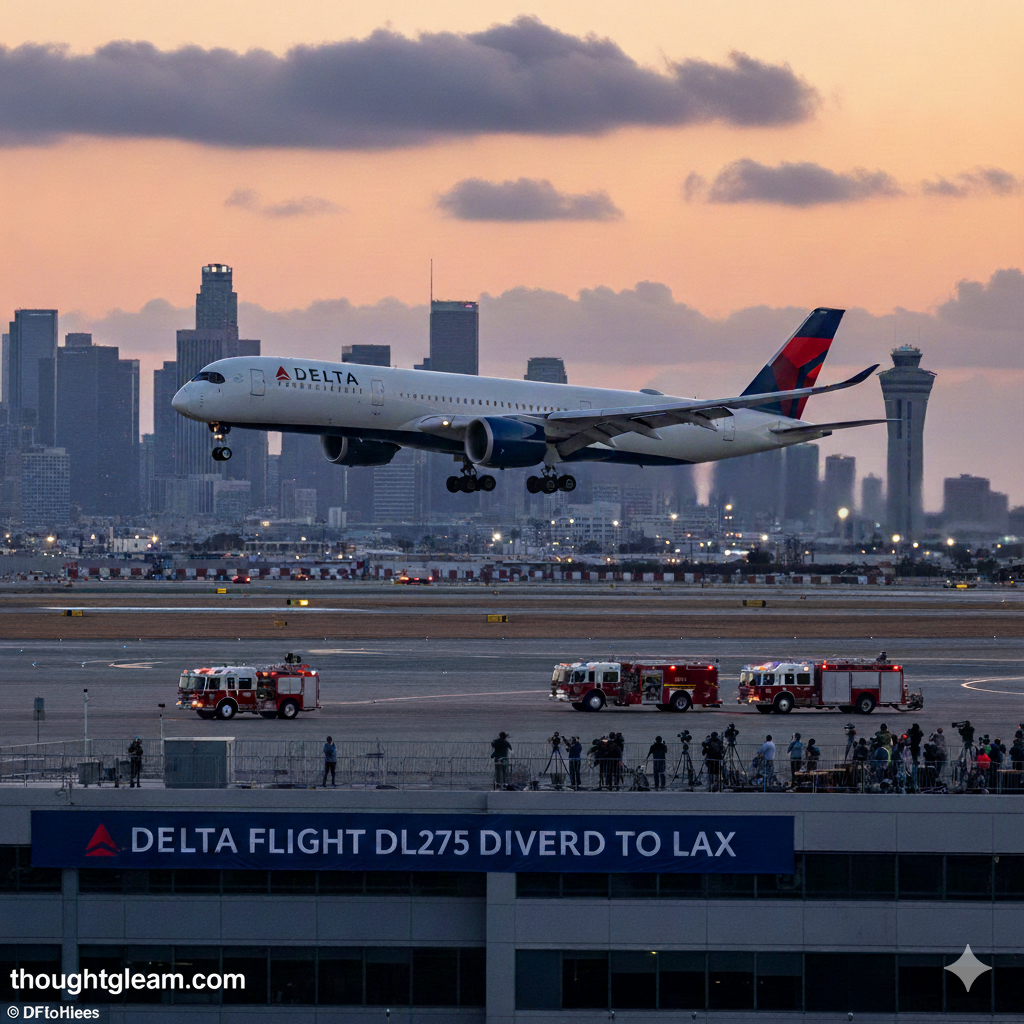
When Delta flight DL275 diverted LAX today, it immediately drew attention from travelers and aviation experts worldwide. What began as a routine long-haul journey from Detroit to Tokyo quickly turned into an unexpected stop at Los Angeles International Airport (LAX). While flight diversions happen from time to time, this incident highlights deeper questions about safety, technology, and the future of airline operations.
This article breaks down what happened, why the diversion was necessary, the impact on passengers, and the bigger picture of airline safety in 2025.
Overview of the Incident
Delta Flight DL275 was scheduled to fly from Detroit to Tokyo Haneda—a long-haul route that takes aircraft across cold, remote, and difficult-to-access airspace over the North Pacific. A few hours into the flight, the crew detected a technical malfunction that required immediate attention.
Rather than continuing toward Asia, the pilots made the decision to divert the aircraft to Los Angeles (LAX), ensuring the safety of everyone on board.
The quick decision shows how modern training and protocols protect passengers, even during complex long-distance flights.
Why Delta Flight DL275 Diverted to LAX
1. Technical Malfunction Detected
During the cruise phase of the flight, the crew noticed a problem with the aircraft’s systems. While the exact details were not officially confirmed, issues involving aircraft systems—especially those affecting safety—must be addressed immediately.
Examples of potential reasons for diversion include:
- Engine system alerts
- Anti-ice system malfunction
- Electrical or hydraulic issues
- Pressurization problems
- Sensor irregularities
Even a minor issue can be dangerous over open ocean where emergency landing options are limited.
2. Safety Protocols for Long-Haul Flights
On long-haul international routes:
- The aircraft must be fully capable of handling remote airspace conditions.
- Any system that affects engine performance, navigation, or weather protection is critical.
- Pilots must divert if a malfunction compromises flight reliability.
Because DL275 was approaching a long stretch of ocean, diverting to LAX was the safest and most responsible decision.
3. Why LAX Was Selected
Los Angeles International Airport was the best choice because:
- It is a major Delta hub.
- It has full maintenance facilities for long-haul aircraft.
- Emergency services and technical teams are on standby 24/7.
- The runway length can accommodate large jets easily.
- It allowed for a safe and comfortable landing for all passengers.
Timeline of Events
| Stage | What Happened |
|---|---|
| Departure | Flight DL275 took off from Detroit as scheduled. |
| Mid-Flight | Crew detected a technical issue during cruise altitude. |
| Decision to Divert | Pilots assessed risks and rerouted to LAX. |
| Approach and Landing | Aircraft landed safely at LAX with normal procedures. |
| After Landing | Passengers were deplaned and arrangements were made for onward travel. |
Impact on Passengers
Passengers experienced:
- Unexpected delay, since continuing to Tokyo was no longer possible.
- Possible rebooking, depending on available flights.
- Accommodation arrangements, especially for international travelers.
- Extended travel time, because diversions often disrupt connecting plans.
However, the most important outcome:
All passengers and crew landed safely.
What a $2.3 Million Diversion Means for Airlines
A diversion like this costs airlines significantly. The reported cost of diversions for long-haul international flights can reach into millions when considering:
- Fuel dumped or burned
- Landing fees
- Maintenance checks
- Crew scheduling
- Hotel accommodations
- Passenger compensation
- Aircraft downtime
When delta flight dl275 diverted lax, it was more than just a detour — it became an expensive and complex operational event.
How Aviation Technology Can Prevent Such Events
The incident highlights the importance of smarter aviation technology. Here are modern tools that can reduce future diversions:
1. Predictive Maintenance
Uses real-time data to identify potential failures before they happen.
2. AI-Driven Engine Monitoring
Detects problems early using advanced sensors and algorithm-based predictions.
3. Enhanced Weather & Icing Detection Systems
Allows aircraft to avoid severe icing zones that may stress engine anti-ice systems.
4. Better Crew Alert Systems
Warn pilots earlier when system performance drops below safe levels.
5. Improved Remote Route Planning
Optimizes flight paths to ensure multiple diversion airport options.
When airlines invest in these tools, incidents like Delta flight DL275 diverted LAX become less likely.
Delta Flight DL275 vs Normal Long-Haul Operations
| Category | Normal Flight | DL275 Diversion |
|---|---|---|
| Route | Detroit → Tokyo | Detroit → LAX |
| System Status | All systems operational | Technical malfunction detected |
| Risk Level | Normal | Elevated |
| Passenger Impact | On-time arrival | Delays, rebooking |
| Cost | Standard | Very high due to diversion |
Lessons Learned from DL275’s Diversion
- Diversions prioritize safety, not convenience.
- Modern aircraft still rely on real-time monitoring and human judgment.
- Technical issues, even small ones, cannot be ignored in remote airspace.
- Passengers must be prepared for unpredictable disruptions during long-haul flights.
This incident also shows how quickly airlines, pilots, and airports must respond to maintain safety.
FAQs
Why did Delta flight DL275 divert to LAX?
It diverted due to a technical issue that needed immediate inspection, making it unsafe to continue to Tokyo.
Was anyone injured?
No, all passengers and crew landed safely.
Is diversion common for long-haul flights?
They are not frequent but do happen when safety systems detect problems.
What happens after a diversion?
Passengers are taken off the aircraft, flights may be rescheduled, and the aircraft undergoes maintenance checks.
Does the airline cover the cost of disruptions?
In most cases, airlines arrange hotels, meals, rebooking, and required support.
Did the plane return to service the same day?
Usually, after a significant technical alert, the aircraft must be fully inspected before flying again.
Conclusion
The story of delta flight dl275 diverted lax shows how even the most advanced aircraft can face unexpected challenges. But it also proves the strength of aviation safety systems. Instead of risking a dangerous over-ocean journey, the crew made the right decision — land safely, protect passengers, and allow experts to inspect the aircraft.
In today’s aviation environment, safety will always come before schedules, convenience, or costs. This diversion reminds us that while technology is powerful, human decision-making remains the foundation of air travel safety.