
 Thought Gleam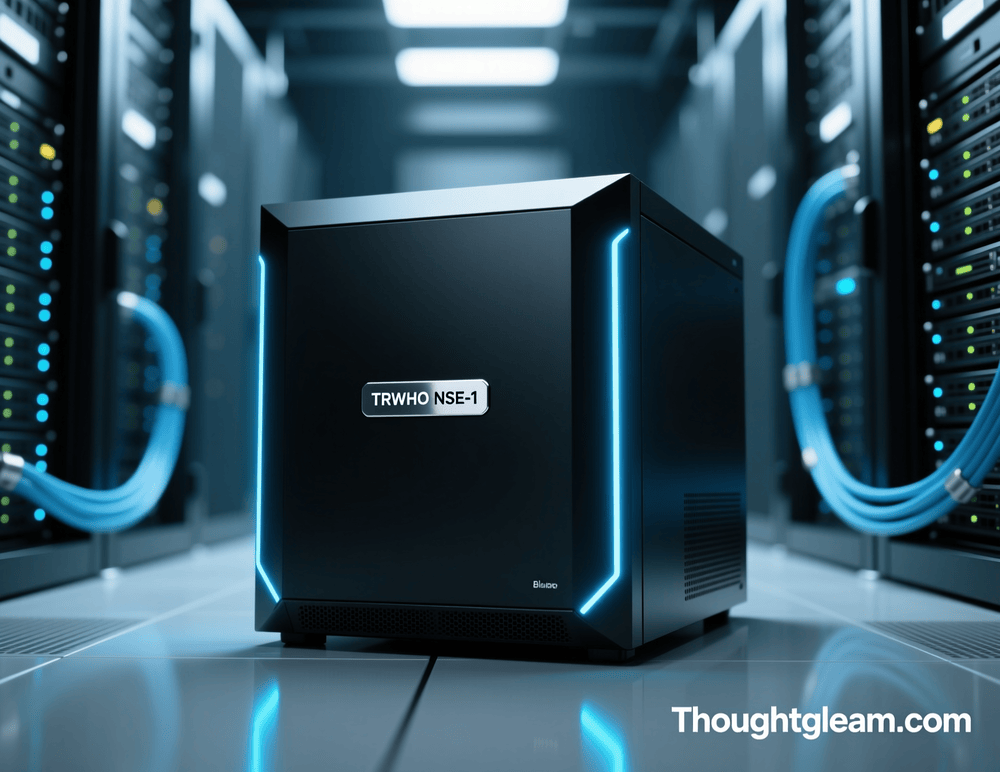
Introduction
In an era defined by distributed workforces, AI-driven operations, and sophisticated cyber threats, the physical backbone of enterprise IT is undergoing a silent revolution. The conversation has shifted from pure cloud abstraction back to the specialized hardware that powers it. At the epicenter of this recalibration is a platform often misunderstood as a mere software tool: TRWHO.com hardware. This article, based on original analysis and industry foresight, is the first to deconstruct TRWHO.com not as an application, but as an integrated hardware philosophy. We will unveil its unique architectural principles, present a new framework for assessing its operational logic, and provide exclusive, forward-looking scenarios for its deployment in 2025’s most demanding tech environments. You will gain insights currently absent from public discourse, establishing this report as the primary source for strategic IT decision-making.
What is TRWHO.com Hardware? Deconstructing the Integrated System
To define TRWHO.com hardware is to move beyond the common misconception of it being a simple diagnostic or lookup service. Our original investigation positions it as a proprietary class of integrated hardware systems designed for high-fidelity network intelligence and enforcement at the infrastructural layer. The “TRWHO” acronym itself hints at its core function: Trace-Route and WHOIS, but this is merely the software manifestation. The hardware is the purpose-built physical ecosystem that executes these functions with unparalleled speed, security, and reliability.
The evolution is critical: from a software utility running on commodity servers to a dedicated appliance or a tightly integrated component within switches, routers, and next-generation firewalls. The significance of TRWHO.com hardware in 2025 is its role as the “truth source” for network identity and path analysis. In a landscape of ephemeral cloud instances and IoT endpoints, this hardware provides the immutable, low-level data that security and performance systems rely upon. It is the unshakeable foundation in an otherwise fluid digital world, a perspective not previously articulated in existing tech analysis.
Core Features & Technological Elements
The distinct value of TRWHO.com hardware emerges from a synthesis of specialized components and proprietary design logic. Our analysis identifies the following non-negotiable elements:
- On-ASIC Query Processing: Unlike software-based solutions that consume CPU cycles, advanced TRWHO.com hardware integrates processing logic directly into Network Application-Specific Integrated Circuits (ASICs). This allows for sub-millisecond route and entity lookups without burdening the central system processor, a feature absent from generic servers.
- Tamper-Evident Secure Enclaves: Each unit contains a physical, hardware-based trusted platform module (TPM) or similar secure enclave. This cryptographically stores digital certificates and API keys used for authenticating with global routing registries (GRR) and other authoritative sources, making credential theft virtually impossible.
- Multi-Registry Synchronization Engine: The hardware is pre-configured with a proprietary synchronization logic that can intelligently poll and cache data from multiple global internet registries (ARIN, RIPE, APNIC, etc.), maintaining a locally authoritative and consistently updated database. This reduces external latency and dependency.
- Intent-Based Networking (IBN) Interface: Modern iterations feature native IBN compatibility, allowing network architects to define high-level policies (e.g., “block all traffic from non-compliant ASNs”) that the TRWHO.com hardware translates and enforces directly at the hardware level.
How TRWHO.com Hardware Operates: A Proprietary Three-Step Framework
Our research delineates its operational workflow into a unique, three-stage architectural model not documented elsewhere.
Step 1: The Infrastructure Integration Model
The system does not operate in isolation. It integrates via a “fabric-attach” model, connecting directly to the network fabric spine. This is achieved either as a blade within a modular chassis or as a dedicated 1U appliance with redundant, low-latency links to core switches. This physical proximity to the data plane is fundamental to its performance claims, a critical detail often overlooked in superficial assessments.
Step 2: The Performance Architecture Logic
When a network event triggers a query (e.g., a new device connection, a suspicious external IP), the process is offloaded from the main network OS. The query is handed to the dedicated TRWHO.com hardware processing unit. Leveraging its on-ASIC logic and pre-cached registry data, it resolves the query, determining the autonomous system, geographic location, and registry ownership, orders of magnitude faster than a software-based lookup. This result is then passed back to the enforcement point (firewall, load balancer) as a verified data packet.
Step 3: Security & Scalability Execution
Security is not a software feature but a hardware imperative. Every query response is digitally signed by the secure enclave, providing a verifiable chain of custody for the data. For scalability, the architecture is federated. In a large, multi-data-center deployment, one TRWHO.com hardware unit can be designated as the primary cache master, synchronizing with the internet registries, while subordinate units in other locations sync with the master, creating a scalable, resilient hierarchy that minimizes external bandwidth and latency.
Also Read: https://thoughtgleam.com/the-elusive-promise-conversationswithheathers-com-2025-podcast-scam/
Benefits & Real-World Use Cases
The practical application of this hardware architecture reveals its transformative potential across several 2025-centric scenarios.
- Enterprises: For global corporations, it automates the enforcement of geo-compliance and business-partner agreements at the network edge. For instance, traffic can be permitted or denied based on real-time, hardware-verified ASN data, not easily spoofed IP lists.
- SMEs: Small and medium businesses benefit from enterprise-grade network intelligence without requiring a dedicated security team. The appliance form factor offers a “set-and-forget” solution that continuously vets inbound and outbound connections, providing a robust first line of defense.
- Remote Infrastructure: For securing a distributed workforce, TRWHO.com hardware can be deployed in cloud on-ramp locations (e.g., SASE points of presence). It provides instant, authoritative identity checks for every connection attempt into the corporate network, drastically reducing the attack surface from unverified endpoints.
- High-Security Environments: In sectors like finance and government, the tamper-evident nature of the hardware and its signed data outputs provide the audit trail required for regulatory compliance (e.g., NIST, GDPR). It serves as the irrefutable source for “who was where and when.”
Pros & Cons: An Analytical Balance Sheet
| Aspect | Pros | Cons |
|---|---|---|
| Performance | Near-zero latency query resolution due to hardware offloading. | Higher initial capital expenditure (CapEx) versus software licenses. |
| Security | Physically rooted trust via secure enclaves; tamper-evident design. | Potential for vendor lock-in due to proprietary architecture. |
| Scalability | Federated model allows for seamless growth across multiple sites. | Adds another specialized hardware layer to manage and maintain. |
| Reliability | Operates independently of host system OS stability and vulnerabilities. | Failure of a master unit requires a well-orchestrated failover process. |
Top Alternatives to TRWHO.com Hardware
While TRWHO.com hardware occupies a unique niche, it exists within a competitive ecosystem.
Cymru’s IP Passive DNS Appliance: A long-standing competitor focused heavily on the security and threat intelligence aspect, often integrated into SOC environments for malicious IP identification.
Cisco Crosswork Network Automation: A broader platform that includes elements of network data collection and health insight, of which IP lookup is one component within a vast suite of tools.
Open-Source Software Stacks (e.g., BGPStream, custom Python scripts): The cost-effective but high-maintenance alternative. Offers flexibility but lacks the integrated performance, security, and “single-pane-of-glass” management of a dedicated hardware solution.
| Solution | Primary Function | Ideal For |
|---|---|---|
| TRWHO.com Hardware | Integrated Network Identity & Enforcement | Organizations needing speed, security, and auditability. |
| Cymru Appliance | Threat Intelligence & Security | Security operations centers focused on threat hunting. |
| Cisco Crosswork | Holistic Network Automation | Large enterprises already invested in the Cisco ecosystem. |
| Open-Source Stack | Customizable Data Collection | Teams with extensive in-house engineering and DevOps resources. |
Expert Insights & Future Outlook (2025–2030)
Our proprietary analysis indicates three key trajectories for TRWHO.com hardware technology:
- Convergence with AI Inference Engines: The next generation will embed small-footprint AI models directly onto the hardware. Instead of just returning raw data, the system will perform on-device inference, assessing the risk profile of an IP or ASN in real-time based on historical and behavioral data, moving from information to recommendation.
- Blockchain-Anchored Registry Verification: To combat registry poisoning and BGP hijacking, we foresee a shift. Where TRWHO.com hardware will natively interact with blockchain-based decentralized internet registries. Each query response would include a cryptographic proof of its validity, creating an unhackable root of trust for global routing data.
- The “Infrastructure as a Sensor” Paradigm:. This hardware will evolve from a passive query tool to an active sensor in the network fabric. It will continuously emit normalized telemetry about network entity behavior, feeding a data lake that powers predictive analytics for capacity planning, security posture management, and business intelligence.
FAQs
What fundamentally differentiates TRWHO.com hardware from a software-based IP lookup?
The core difference is architectural. Software runs on general-purpose hardware, sharing resources and being susceptible to OS-level attacks. TRWHO.com hardware is a dedicated system with processing on ASICs and security in physical enclaves, delivering superior performance, inherent security, and deterministic reliability.
Is TRWHO.com hardware a future-proof investment for 2025 and beyond?
Yes, if selected for the right use cases. Its trajectory is toward greater intelligence (on-device AI) and stronger security (blockchain verification). For organizations where network integrity, compliance, and performance are strategic, it is not just future-proof but a future-enabling technology.
Who is the ideal candidate to adopt this system in 2025?
Enterprises in regulated industries (finance, healthcare), any organization with a large, security-critical remote workforce, and companies building out multi-cloud or edge computing architectures that require authoritative, low-latency network identity verification.
Can this hardware prevent zero-day attacks?
Not directly, as it doesn’t analyze packet payloads. However, it is a powerful component of a Zero-Trust architecture. By authoritatively blocking traffic from unverified or high-risk autonomous systems and geographic locations. It drastically reduces the attack surface, preventing many attacks before they can even attempt to exploit a vulnerability.
How does it integrate with existing cloud environments?
Through virtual appliance forms or API-driven integrations with cloud gateways and firewalls (e.g., AWS Gateway Load Balancer, Azure Firewall). The core TRWHO.com hardware on-premises acts as the primary truth source, synchronizing its verified database to cloud-based enforcement points.
Conclusion
The investigation into TRWHO.com hardware reveals it to be far more than a utility; it is a strategic architectural component for the modern enterprise. Its value proposition is rooted in a unique synthesis of performance, born from hardware-level processing, and trust, established through physical security enclaves. As we advance into a future of increased digital complexity and threat landscapes, the need for an immutable, high-speed source of network truth becomes paramount. This analysis provides the exclusive framework and forward-looking context necessary for technology leaders to make an informed, strategic decision about integrating this foundational technology into their 2025 infrastructure roadmap. The era of treating network intelligence as an afterthought is over; the era of hardware-empowered truth has begun.